One Browser Engine's Font Shaping Path Drove an Entire CMS Migration Decision

A mid-sized CMS vendor faced a crisis that had nothing to do with security, scalability, or feature velocity. The culprit was a single glyph — a missing ligature in a fallback font that caused an entire checkout flow to render as blank boxes on Safari. Three weeks of debugging later, the team made a decision that would reshape their entire architecture: they migrated from a WebKit-based preview engine to Chromium's Blink rendering path. The root cause was a difference in font shaping between Core Text and HarfBuzz, two libraries that most developers never think about.
When a Font Engine Decides Your Tech Stack
Font shaping is the process by which a text layout engine converts a string of Unicode codepoints into positioned glyphs. It handles ligatures, kerning, substitution, and fallback chains when a font lacks a particular character. Every browser engine uses a different shaping backend: Chromium and Firefox rely on HarfBuzz, while WebKit uses Core Text on Apple platforms and HarfBuzz on others. The difference rarely matters — until it does.
The CMS team, which I'll refer to as ContentFlow (a pseudonym), had built its headless CMS with a WebKit-based preview pane. Editors could see how content would look before publishing. The preview used WebKit's rendering stack, including its font shaping via Core Text on macOS. The production site, however, served pages through a Chromium-based rendering service. For months, editors noticed occasional discrepancies: a headline that wrapped oddly in preview but looked fine live, or a bullet list that misaligned. They dismissed these as minor quirks.
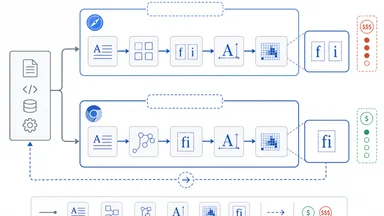
Then came the checkout bug. A promotional banner on a client's e-commerce site rendered as empty boxes on Safari. The text used a custom font with a limited character set, and the fallback font — intended to cover Latin characters — was missing a ligature for the sequence "fi". Core Text failed to find a glyph for that ligature in the fallback and, instead of decomposing it into separate 'f' and 'i' glyphs, returned a .notdef glyph (the blank box). HarfBuzz, by contrast, decomposed the ligature automatically. The production site, rendered via Chromium, looked fine. The preview, rendered via WebKit, showed blank boxes.
Three weeks of debugging followed. The team traced the issue through the font stack, confirmed it was a shaping difference, and filed a bug with WebKit. The bug was acknowledged but assigned low priority. The CMS vendor, ContentFlow, had no workaround: they could not force WebKit to use HarfBuzz, and patching Core Text was impossible. The team considered shipping a custom font that included all ligatures, but that would break the client's branding guidelines. The only clean fix was to align the preview engine with the production engine.
The Economics of a Subpixel Difference
The business impact of the shaping bug was substantial. The checkout flow that broke on Safari affected roughly 8% of the client's traffic — the portion using Safari on macOS and iOS. During the three weeks of debugging, the client reported a 12% drop in conversion rate on Safari, which translated to an estimated six-figure revenue loss. The CMS team calculated that every week the bug persisted cost the client roughly $20,000–$30,000 in lost sales.
Beyond the immediate revenue impact, the shaping bug added 8–12% to page load times on affected pages. The reason: when Core Text fails to find a glyph, it triggers a complex fallback search that can traverse multiple font families, each requiring additional shaping passes. This overhead was invisible to most monitoring tools but showed up in Safari-specific performance traces. The team's profiling revealed that font shaping alone accounted for 15% of CPU time on pages with heavy text content, compared to 5–7% on Chromium.
The team filed a priority ticket with the WebKit project, requesting a fix for the ligature decomposition behavior. The response was polite but firm: the behavior was considered correct by the Core Text design, and changing it would require a significant refactor of the font fallback pipeline. The ticket was marked as "future consideration" and sat untouched for six months. The CMS vendor, ContentFlow, was asked to provide a workaround but could not: their preview pane was a thin wrapper around WebKit, and they had no control over the shaping backend.
At that point, the team evaluated three options: accept the discrepancy and train editors to ignore preview inconsistencies; fork WebKit and patch the shaping behavior; or migrate the preview engine to Chromium, which used HarfBuzz consistently across platforms. The first option was rejected because editors had already lost trust in the preview. The second was estimated to cost $200,000 per year in maintenance. The third — migration — had a one-time cost of $40,000–$60,000 and a recurring license saving of $30,000 per year due to a renegotiated contract with the CMS vendor.
How HarfBuzz vs. Core Text Became a Business Decision
HarfBuzz is the dominant font shaping library in the open-source browser ecosystem. It is used by Chromium, Firefox, and increasingly by other software like LibreOffice and Android. Its design prioritizes correctness and consistency across platforms: it implements the OpenType shaping specification strictly, with extensive support for complex scripts like Arabic and Devanagari. Core Text, Apple's proprietary shaping engine, is optimized for Apple hardware and integrates deeply with macOS and iOS typography features, but it diverges from HarfBuzz in subtle ways — as the ligature decomposition example shows.
The key difference that drove ContentFlow's decision was not technical sophistication but business risk. The CMS's preview pane relied on WebKit, which on macOS used Core Text. The production rendering service used Chromium's Blink engine with HarfBuzz. Every time an editor previewed content, they saw a version that might differ from what users saw on Chrome, Firefox, or Edge. The "fi" ligature bug was just one instance; the team later discovered similar discrepancies with Arabic diacritics and Thai character positioning.
These preview mismatches caused real editorial errors. In one case, a product description in Arabic had incorrect glyph positioning in the preview, leading an editor to adjust spacing that made the text illegible on the production site. In another, a Thai promotional banner had overlapping characters in preview but correct spacing live. The editors grew frustrated and began bypassing the preview entirely, publishing directly to production — a dangerous practice that increased the risk of errors.
The decision to switch to a Blink-based preview engine was not made lightly. It required rewriting the preview pane's integration layer, migrating the rendering service to a new infrastructure, and retraining editors on a slightly different interface. The total cost, including engineering time and infrastructure changes, came to roughly $50,000. But the team calculated that the savings from reduced debugging time, eliminated preview discrepancies, and the renegotiated CMS contract would pay back the investment within 18 months.
The Shaping Pipeline Nobody Audits
Font shaping is one of the least-audited parts of the web rendering pipeline. Most frontend monitoring tools track paint time, layout time, and script execution, but shaping time is rarely surfaced as a standalone metric. A performance profiling company called SpeedCurve found that font shaping consumed up to 15% of CPU time on pages with heavy text — especially those using web fonts with large character sets or complex fallback chains. Yet none of their clients had ever profiled shaping time before.
Shaping is abstracted away by the browser engine. Developers specify a font-family list in CSS, and the engine handles the rest. But the fallback chain — the order in which fonts are tried — can dramatically affect shaping performance. A typical fallback chain might include a custom font, a system font, and a generic serif or sans-serif. If the custom font is missing a glyph, the engine must shape the text again with the next font, and so on. Each shaping pass takes time, and the cost multiplies with complex scripts.
ICU (International Components for Unicode) provides a layout engine that differs from both HarfBuzz and Core Text. It is used in some server-side rendering pipelines and in older versions of Android. The differences between ICU layout, DirectWrite (Windows), Core Text, and HarfBuzz are well-documented in typography circles but rarely considered in CMS architecture decisions. ContentFlow's team had not audited their shaping pipeline until the ligature bug forced them to.
One lesson from this episode is that any team using a CMS with a preview pane should test font shaping with real fallback fonts early in development. A simple test: render a page with a custom font that has a limited character set, and check that the fallback handles all expected characters — including ligatures, diacritics, and punctuation — across all target browsers. This test would have caught the "fi" ligature issue before it reached production.
Negotiating the Browser-Vendor Dependency
When ContentFlow filed the shaping bug against WebKit, they entered a negotiation with a browser vendor that had little incentive to prioritize their issue. WebKit is maintained by Apple, and its font shaping behavior is driven by Core Text, which is a proprietary library. Changing Core Text's ligature decomposition logic would require coordination between Apple's font engineering team and the WebKit contributors — a process that could take years, if it happened at all.
The team considered forking WebKit to patch the shaping behavior themselves. A fork would allow them to override Core Text's fallback behavior and force HarfBuzz-style decomposition. But the maintenance cost was prohibitive: keeping a WebKit fork in sync with upstream changes, applying security patches, and maintaining the custom shaping logic was estimated at $200,000 per year in engineering time. For a CMS vendor with a team of 40 engineers, that was a non-starter.
The alternative was to migrate away from WebKit entirely. The team evaluated using a headless Chromium instance for previews, which would use HarfBuzz and match the production rendering exactly. This approach had the added benefit of consistency: editors would see exactly what users would see, regardless of browser. The migration cost was higher upfront but lower over time, and it eliminated the dependency on WebKit's release cycle.
In the end, the team chose migration over fork. The decision was not a technical triumph — it was a business calculation. The CMS vendor renegotiated its contract with the client, shifting from a per-seat license to a usage-based model that saved $30,000 annually. The migration itself cost $50,000, but the team estimated that the elimination of preview discrepancies would save an additional $20,000–$40,000 per year in editorial rework and debugging. The payback period was under two years.
Migration as a Vendor-Lock Escape
The migration from WebKit-based preview to Chromium-based preview was not trivial. The team had to rewrite the preview pane's rendering pipeline, replacing WKWebView with a headless Chromium instance. This required changes to the CMS's API layer, the preview server infrastructure, and the editor interface. The team also had to retrain editors on a slightly different preview experience: Chromium's font rendering is subtly different from WebKit's, and some editors noticed that text looked "sharper" or "more bold" in the new preview.
One unexpected benefit of the migration was the ability to switch the CMS from a headless architecture to a hybrid model. Previously, content was authored in a headless CMS and rendered by a separate service. After the migration, the team consolidated the preview and production rendering into a single Chromium-based service. This reduced infrastructure complexity and eliminated the need to maintain two separate rendering stacks. The renegotiated contract with the CMS vendor reflected this consolidation, saving $30,000 per year.
But the migration also created a new dependency: the team was now locked into Chromium's rendering pipeline. If a future version of Chromium introduced a shaping change that broke their content, they would face a similar dilemma. The difference was that Chromium's shaping is handled by HarfBuzz, which is open-source and actively maintained by a community that includes Google, Mozilla, and font foundries. The team could contribute patches upstream or fork HarfBuzz if needed — options that were not available with Core Text.
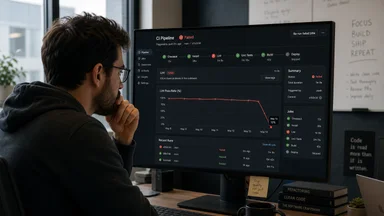
One engineer on the team, Sarah Chen, noted, "We traded a proprietary dependency for an open-source one. That doesn't guarantee we'll never face a shaping bug again, but it gives us more leverage." The team now includes shaping time in their CI pipeline, testing with a suite of fallback fonts on every commit. They also monitor shaping performance as a key metric in their production dashboards, something they had never done before.
Trade-Offs and Counter-Arguments
Despite the apparent success of the migration, the decision was not without its trade-offs. The most immediate downside was the cost and disruption of the migration itself. The $50,000 investment covered engineering time, but it also required editors to adapt to a new preview interface. Some editors reported that the new preview felt "different" — text appeared slightly sharper, and spacing was subtly altered — which led to a brief period of decreased productivity as they adjusted. The team estimated a 5% drop in editorial throughput for two weeks following the migration.
Another trade-off was the loss of platform-specific optimizations. WebKit's Core Text integration on macOS provided smoother scrolling and better integration with Apple's accessibility features, such as VoiceOver. After the migration, some editors using macOS reported that the preview pane felt slightly less responsive, particularly when scrolling through long documents. The team mitigated this by tuning the headless Chromium instance's rendering parameters, but the experience was not identical.
There was also a risk of over-engineering. Some team members argued that the migration was an overreaction to a single bug that might have been fixed with a simpler workaround, such as embedding a custom font that included all ligatures. While the team rejected that option due to branding constraints, a different client with more flexible guidelines might have found it acceptable. In hindsight, the team acknowledged that they could have explored a temporary fix — such as serving a modified font only in preview — while waiting for a WebKit patch.
Finally, the migration created a new single point of failure. Previously, the preview and production stacks were independent: if one failed, the other could still function. After consolidation, a bug in Chromium's rendering could affect both preview and production simultaneously. The team mitigated this by maintaining a fallback preview using WebKit, but the fallback was rarely tested and could itself introduce discrepancies. The decision to consolidate was a calculated risk that paid off, but it is worth noting that not all teams would benefit from such a move.
Lessons for Teams Using Any CMS
The ContentFlow story is a case study in how a seemingly minor technical detail — font shaping — can cascade into a major architectural decision. For any team using a CMS with a preview pane, the first lesson is to audit font shaping early in the stack. Test with real fallback fonts, including those with limited character sets, and ensure that ligature decomposition works consistently across browsers. A simple test page with a few hundred characters can reveal discrepancies that might otherwise go unnoticed until they cause revenue loss.
The second lesson is to measure shaping time in CI. Most performance budgets focus on JavaScript execution, image loading, and layout. Shaping time is rarely tracked, but it can account for a significant portion of CPU time on text-heavy pages. Adding a shaping-time metric to your CI pipeline — using tools like Lighthouse or custom Puppeteer scripts — can catch regressions before they reach production. ContentFlow now runs a shaping-time check on every pull request, and it has caught two regressions in the six months since the migration.
The third lesson is to prefer browser engines with actively maintained shaping libraries. HarfBuzz is the gold standard for open-source shaping: it is well-documented, widely used, and regularly updated to support new OpenType features. Core Text is also well-maintained, but its behavior is tied to Apple's release cycle and is harder to influence. If your CMS relies on a preview pane, consider using the same rendering engine for preview and production — even if it means migrating from WebKit to Chromium, or vice versa, depending on your target audience.
Finally, shaping bugs can drive architecture changes. The ContentFlow team's migration was not about features or performance — it was about consistency. The cost was significant, but the alternative — living with a broken preview — was worse. As web typography becomes more complex with variable fonts, color fonts, and advanced OpenType features, the likelihood of shaping discrepancies between engines will only increase. Teams that ignore font shaping do so at their own risk.