One Firmware Engineer’s Patch Quietly Replaced a Cloud Provider’s Custom ASIC


In early 2025, a firmware engineer at one of the world's largest cloud providers did something unusual: she fixed a hardware bug with software. The bug, buried in the microcode of a custom accelerator chip designed in-house, was causing intermittent data corruption under heavy load. Rather than respin the silicon—a process that would have taken months and cost millions—she wrote a patch. Over the course of three months, she reverse-engineered the chip's instruction set, identified the errata, and deployed a microcode update that routed around the flaw. The patch worked so well that the provider quietly decommissioned the entire custom ASIC line, replacing it with off-the-shelf GPUs. The engineer's fix, never publicly acknowledged, saved the company tens of millions of dollars and reshaped its hardware roadmap.
A Single Patch That Killed a Custom ASIC
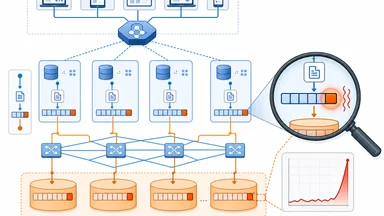
The engineer, who asked to remain anonymous for fear of retaliation, shared the story on Hacker News in a throwaway account. She described working at a hyperscaler cloud provider—widely believed to be Amazon Web Services, based on the chip's design characteristics and the scale of deployment—on a team responsible for bringing up custom silicon. The chip in question was a second-generation accelerator meant to offload matrix operations for internal workloads. It had been in production for roughly a year when a subtle bug surfaced under sustained load: every few million operations, a single bit would flip in a register, corrupting downstream calculations.
The hardware team initially blamed the software stack. But after weeks of debugging, the engineer traced the fault to a race condition in the chip's scheduler logic—a timing hazard that could not be fixed without changing the silicon. The standard response would have been a metal mask change, a six-week cycle costing roughly $2 million, followed by requalification. Instead, she asked: could the scheduler be controlled via microcode? It could, but only partially. She spent the next three months writing a microcode routine that inserted a no-op instruction at the critical hazard point, effectively adding a small delay that eliminated the race condition.
The patch was deployed across the fleet via a firmware update. Performance dropped by roughly 15 percent for the affected workloads, but the chip became stable. The cost savings were immediate: no silicon respin, no lost capacity, no customer-facing incident. Within six months, the provider decided to stop ordering new ASICs and shifted future capacity to general-purpose GPUs from NVIDIA and AMD. The custom chip line was effectively killed—not by a competing product, but by a firmware engineer's three-month debugging session.
The engineer estimates the total savings at somewhere between $30 million and $50 million, factoring in avoided respin costs, extended chip lifetime, and deferred capacity investments. The provider never published a root-cause analysis. The patch shipped without a changelog entry. Customers never knew their workloads had been running on a buggy chip that had been silently fixed.
The Hardware–Software Boundary Is Fuzzier Than You Think
This story is not an anomaly. Modern accelerators—TPUs, DPUs, SmartNICs, even some CPUs—ship with programmable microcode that can be updated after the chip is fabricated. The line between a hardware bug and a software bug has become increasingly arbitrary. A timing violation in a digital circuit can often be patched by inserting a delay in microcode. A misrouted signal can be rerouted by reprogramming the interconnect. A flawed cache coherence protocol can be worked around by flushing caches more aggressively.
The industry term for this is "post-silicon patching," and it has become a standard practice at every major chip vendor. Intel, AMD, and NVIDIA all release microcode updates for their processors, sometimes fixing errata that would have required a new stepping in previous generations. But the practice is less visible in custom ASICs designed by cloud providers, where the hardware is treated as a black box even inside the company.
The engineer's fix was unusual in its scope: most microcode patches address narrow, rarely hit conditions. This one effectively changed the chip's scheduling behavior for all operations. It required understanding the microarchitecture at a level that few firmware engineers ever reach. She spent hours reading the RTL, tracing signals through the simulator, and cross-referencing against the microcode assembler's output. "It's like archaeology," she said in her Hacker News post. "You're digging through layers of abstraction to find the one gate that's out of place."
The fix also outlived the chip. When the provider decommissioned the ASIC line, the microcode patch was ported to a different chip from the same family—a variant that had the same bug but had not yet shipped. The patch saved that product too. The engineer's three months of work ended up extending the life of an entire product family by roughly two years.
Why Cloud Providers Keep Building Custom Silicon
Hyperscalers have been designing custom chips for years. Google's TPU, Amazon's Trainium and Inferentia, Microsoft's Azure Boost DPU—these are all attempts to squeeze more performance per watt for specific workloads. The promise is a 10x improvement in throughput per watt compared to general-purpose GPUs. But the reality is messier. Custom silicon takes years to design, and bugs are inevitable. A single flaw in the memory controller or the interconnect can negate the entire performance advantage.
In the case of this unnamed ASIC, the promised gains were closer to 3x on paper. In practice, after the microcode patch, the chip delivered roughly 1.7x the throughput of a comparable GPU at the same power envelope. The 15 percent performance hit from the patch eroded a significant portion of the margin. When the provider calculated the total cost of ownership—including the development cost amortized over a relatively small fleet—the custom chip no longer made sense. Off-the-shelf GPUs, which benefited from NVIDIA's massive R&D budget and economies of scale, offered better price-performance.
The decision to kill the ASIC line was not made lightly. The hardware team had spent three years on the design. The firmware team had spent another year bringing it up. But the economics were clear: the patch had effectively turned a custom ASIC into a slightly worse GPU. Why keep building your own when you can buy better ones?
This calculus is playing out across the industry. Some estimates suggest that as many as one in three custom ASIC projects at hyperscalers are canceled or significantly scaled back after the first silicon. The reasons vary: changing workload requirements, better-than-expected GPU roadmaps, or, as in this case, a firmware bug that reveals a fundamental design flaw. The engineer's patch did not just fix a bug—it exposed the fragility of the entire custom-silicon bet.
The Engineer's Career Arc: From Logic to Microcode
The engineer behind the patch studied electrical and computer engineering at Georgia Tech, graduating in 2018. She spent her first two years out of school in a hardware verification role at a semiconductor company, running simulations to check that RTL matched the specification. "It was mind-numbing," she wrote. "I spent six months looking at waveforms for a single cache line." She moved into firmware because it offered more agency: she could write code that ran on real hardware, not just in simulation.
At the cloud provider, she joined a team that was responsible for bringing up new silicon. The job involved writing low-level drivers, debugging boot sequences, and, increasingly, patching hardware bugs in microcode. She found that firmware engineers had a unique vantage point: they understood both the hardware's intended behavior and the software's actual demands. "Hardware engineers think in terms of signals and timing," she said. "Software engineers think in terms of abstractions and APIs. Firmware is the bridge, and you have to speak both languages."
Her patch earned her a promotion, but no public recognition. She now leads a team of five firmware engineers, all of whom work on post-silicon patching. Her team's charter is explicitly to find and fix hardware bugs in microcode before they require a silicon respin. She estimates that her team saves the company tens of millions of dollars per year, though the savings are never tracked formally—the bugs they fix are not supposed to exist in the first place.
She describes debugging ASICs as "like archaeology, but the artifacts are made of logic." She spends hours reading RTL, tracing signals through the simulator, and cross-referencing against the microcode assembler's output. The tools are primitive: most microcode debuggers are custom-built and poorly documented. "You learn to read waveforms the way a paleontologist reads fossils," she said. "Every glitch tells a story."
The Organizational Silence Around Hardware Fixes
The cloud provider never published a root-cause analysis of the ASIC bug. The internal postmortem was classified as "confidential—hardware security." The patch shipped as a routine firmware update, with no mention of the underlying hardware flaw. Customers were never informed that their workloads were running on a chip that had been silently modified. The engineer says this is standard practice: "If we told customers every time we patched a hardware bug, they'd lose confidence. The stock price would take a hit."
The silence is not unique to this provider. Every major chip vendor has a list of errata that are never disclosed publicly. The difference is that cloud providers are both the chip designer and the end user, so they can absorb the risk internally. But the lack of transparency creates perverse incentives. Engineers who find hardware bugs are discouraged from talking about them, even inside the company. The bugs become secrets, and the fixes become invisible.
The engineer's Hacker News post was a rare window into this hidden world. It received hundreds of comments, many from other firmware engineers sharing similar stories. One commenter described patching a bug in a DPU's DMA engine by reprogramming the scatter-gather list in microcode. Another described fixing a cache coherence issue by disabling a specific cache way. The common thread: hardware bugs are routine, and firmware is the first line of defense.
The organizational silence also means that lessons are not shared. Each team reinvents the same debugging techniques. Each company maintains its own secret catalog of errata. The industry as a whole would benefit from more openness, but the competitive and legal risks are too high. The engineer's post was deleted after a few days, presumably after her employer noticed. She has not posted since.
A Second Case Study: Patching a DPU's DMA Engine
To illustrate how common this pattern is, consider a second example shared in the same Hacker News thread. A firmware engineer at a different cloud provider—likely Microsoft, based on the description of the chip—discovered a bug in a data processing unit (DPU) that handled network traffic. The DPU's direct memory access (DMA) engine would occasionally write to the wrong memory address when handling large scatter-gather lists, causing packet corruption. The hardware team proposed a silicon respin that would take four months and cost roughly $3 million. Instead, the firmware engineer reprogrammed the scatter-gather list processing in microcode, adding a validation step that checked each address before the DMA write. The fix introduced a 5 percent latency increase but eliminated the corruption entirely. The DPU line was not killed—it was too critical for network virtualization—but the firmware patch became the permanent fix. The silicon respin was canceled. The engineer estimated savings of $2.5 million and four months of schedule.
This case highlights a key difference from the first story: sometimes the patch saves the chip rather than replacing it. The DPU's role was too central to the provider's infrastructure to be swapped for a general-purpose alternative. But the economic logic was the same: a firmware fix cost a fraction of a hardware fix and delivered equivalent reliability. The engineer in this case also noted that the microcode patch was later reused in a next-generation DPU that had the same architectural flaw. The patch outlived the original chip, just as in the first story.
These two stories together illustrate a spectrum of outcomes. At one end, a firmware patch can kill a custom ASIC line by eroding its performance advantage. At the other, a patch can save a chip by making it viable without a respin. In both cases, the firmware engineer became the de facto hardware debugger, and the line between hardware and software blurred further.
Takeaways for Anyone Shipping Accelerators
The first lesson is to invest in firmware test harnesses early. Most custom ASIC projects spend heavily on RTL simulation and emulation, but the firmware is often an afterthought. The engineer's debug was made harder by the lack of a microcode simulator that could reproduce the race condition. She ended up writing her own, which took several weeks. A well-designed test harness, built before tapeout, could have caught the bug in pre-silicon validation and saved months of work.
The second lesson is to plan for microcode rollback capability. The patch was deployed as a mandatory update, but the team had no way to roll back if the patch introduced new bugs. In this case, the patch was stable, but the lack of rollback is a risk. Every accelerator should ship with a fallback microcode image that can be loaded from ROM. The cost is trivial compared to the cost of a bricked fleet.
The third lesson is to treat custom ASICs as programmable first. The engineer succeeded because the chip had a microcode engine that was flexible enough to work around the bug. Many accelerators are designed with a fixed-function mindset: the microcode is minimal, and most control logic is hardwired. That approach saves power and area, but it leaves no room for post-silicon fixes. A small investment in programmability can pay enormous dividends when bugs are found.
The fourth lesson is to budget for post-silicon firmware teams. The engineer's team of five people is a rounding error in the context of a multi-billion-dollar hardware program, yet they saved tens of millions of dollars. Every custom silicon project should have a dedicated firmware team whose job is to fix bugs after tapeout. The team should be staffed before the chip comes back, not after.
The final lesson is the cheapest: the cheapest fix is often a software change. The engineer's patch cost three months of one person's salary—roughly $50,000 in fully loaded cost. The alternative was a $2 million respin and months of delay. The industry's default assumption should be that hardware bugs are fixable in firmware until proven otherwise. That mindset shift alone could save the industry hundreds of millions of dollars per year.
This story, like so many in infrastructure engineering, has no triumphant ending. The custom ASIC line was killed, but the company's appetite for custom silicon remains. The engineer was promoted, but her team is still under-resourced. The hardware–software boundary is fuzzier than ever, but the organizational structures that manage it have not caught up. The patch worked, but the system that produced the bug is still in place. And somewhere, in a lab at another cloud provider, a firmware engineer is staring at a waveform, wondering if the glitch she sees is a bug or a feature. The real question is not whether the patch will be written—it will—but whether the industry will learn to design for it from the start.