Three Reinsurers Paid a Single Marine Cargo Claim on Two Different Loss Estimates

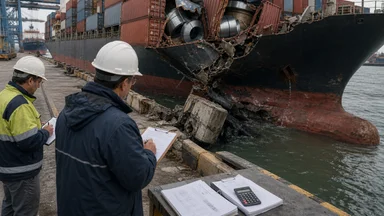
In March 2023, a container ship maneuvering in the Port of Santos struck a jetty at low speed. The impact damaged roughly 200 steel coils stowed in two forward holds. The Brazilian port authority estimated the loss at between US$ 4 million and US$ 6 million. That range seemed wide, but it was only the beginning. Two lead underwriters on the primary marine cargo policy filed preliminary reports that differed by more than US$ 1.5 million. The shipment was specialty steel coils—high-tensile grades used in automotive and oilfield equipment—not general freight. Each of the three reinsurers on the risk began its own loss-adjuster inspection. By the time the dust settled, what should have been a routine cargo claim had become a case study in how reinsurance recoveries can diverge, and how contract language can force them back together.
The Same Shipment, Two Totally Different Numbers
The primary insurer, a mid-sized marine underwriter based in São Paulo, had ceded 70% of the line to three reinsurers. The first loss estimate came from the primary's own adjuster, who arrived on site 48 hours after the accident. He counted 47 damaged coils with visible deformation and based his figure on replacement cost—roughly US$ 2,800 per coil, plus freight and handling. That gave an initial estimate of US$ 4.2 million.
A second adjuster, appointed by the quota-share reinsurer, inspected the same coils two weeks later. She found that 12 of the coils had pre-existing surface corrosion, which she argued reduced their market value by 40%. Using a market-value approach, she assessed the loss at US$ 2.8 million. The gap between the two estimates was roughly US$ 1.4 million—enough to trigger a dispute clause in the treaty.
The third reinsurer, which held a facultative certificate on the top layer, did its own inspection through a third adjuster. That adjuster split the difference, arriving at US$ 3.5 million, but noted that the pre-existing damage should be excluded entirely from the claim. By late May 2023, three reinsurers were holding three different numbers for the same cargo loss.
How a Single Claim Splits Across Three Reinsurers
The primary marine cargo policy had a total limit of US$ 25 million. The insurer retained the first US$ 3 million (30% of the line) and ceded the rest through three layers. First came a quota-share treaty that took 30% of the first US$ 10 million. Above that, an excess-of-loss layer kicked in for losses between US$ 8 million and US$ 18 million. Finally, a facultative certificate covered the peak exposure from US$ 18 million to US$ 25 million.
In this case, the loss fell entirely within the quota-share layer, but the excess layer and facultative certificate were still notified because the initial estimates exceeded the quota-share attachment point. Each reinsurer had a contractual right to appoint its own adjuster, and each did. The quota-share partner's adjuster produced the lowest figure; the excess-layer adjuster's figure was highest. The facultative reinsurer's adjuster landed in the middle.
This fragmentation is common in layered programs. A single claim can trigger multiple notifications, each with its own adjustment process. The cost of adjusting the claim—adjuster fees, legal review, arbitration—can itself run into six figures, which is ultimately borne by the insured through premium loads. For a claim of this size, total adjustment costs often fall in the range of US$ 150,000 to US$ 300,000, depending on the number of adjusters and the complexity of the dispute.
Loss-Adjuster A vs. Loss-Adjuster B: Two Methodologies
The core disagreement was methodological. Adjuster A used a replacement-cost approach: the insured was entitled to the cost of replacing the damaged coils with new material of identical specification, delivered to the same port. That approach yielded a higher number because it ignored any pre-existing condition or market depreciation.
Adjuster B applied a market-value deduction. She argued that the coils, once corroded, could only be sold as secondary steel at roughly 60% of prime value. She subtracted the pre-existing corrosion damage from the claim, reducing the recoverable amount. The difference between the two methods was roughly US$ 1.2 million to US$ 1.8 million, depending on how many coils were excluded.
A third adjuster, hired by the facultative reinsurer, proposed a blended approach: accept the replacement cost for the 35 coils with no pre-existing damage, but apply a 25% deduction for the 12 corroded coils. That gave a number near US$ 3.5 million. None of the three adjusters agreed on the scope of pre-existing damage, and each had a different view on whether corrosion that predated the voyage should be covered at all.
Methodological disagreements of this kind are not rare. In a similar case involving a shipment of aluminum sheets from Rotterdam to Houston in 2022, two adjusters differed by roughly 35% on the loss value—one using replacement cost, the other using market value after a documented surface defect. That claim took 11 months to settle, with the final figure landing within 5% of the midpoint. The lesson is that the choice of valuation method can swing the loss estimate by 20% to 40% on specialty cargo, where the condition at time of loss is often contested.
The Reinsurance Contract Clause That Broke the Deadlock
The quota-share treaty included a "hours clause" that required all layers to use the same loss figure for settlement purposes. In theory, this prevents the primary insurer from recovering different amounts from different reinsurers for the same claim. In practice, it meant that the three reinsurers had to agree on a single number before any payment could be made.
By August 2023, with no agreement in sight, the lead underwriter proposed a blended estimate of US$ 3.6 million. Two reinsurers accepted; the third demanded arbitration. The arbitration hearing was held in February 2024, nearly a year after the loss. The panel—composed of three marine insurance specialists—ruled in favor of the median estimate, which happened to be the facultative reinsurer's figure of US$ 3.5 million.
The clause that broke the deadlock was the joint loss-settlement agreement, a standard provision in many quota-share treaties. It requires the parties to negotiate in good faith and, failing that, to submit to binding arbitration. Without it, each reinsurer could have paid a different amount, leaving the primary insurer to reconcile the differences. Some treaties go further, including a "binding loss-adjuster" clause that requires all layers to use a single adjuster appointed by the lead underwriter. In the Santos case, no such clause existed, which allowed the fragmentation to occur.
There is a trade-off here: requiring a single adjuster reduces disputes but also concentrates power in the hands of the lead underwriter. A lead adjuster with a pro-insured bias could inflate the loss, increasing the reinsurers' share. Conversely, a lead adjuster with a pro-reinsurer bias could suppress the claim, leaving the primary insurer under-recovered. The joint loss-settlement agreement strikes a middle ground—it allows multiple adjusters but forces a single settlement through negotiation or arbitration.
Timeline: 14 Months from Loss to Final Recovery
The loss occurred on March 17, 2023. The primary insurer notified all three reinsurers within 72 hours, as required by the treaty. The first adjuster's estimate was submitted 45 days later, on May 1. The second estimate arrived on August 5, roughly 90 days after the first. Negotiations continued through the fall, with no resolution.
Arbitration was formally requested in November 2023. The hearing lasted two days in February 2024, and the decision was issued in March. The final settlement—US$ 3.5 million, minus the primary's retention and the quota-share partner's share—was wired on May 10, 2024. Total elapsed time: 14 months.
For a claim of this size, 14 months is within normal bounds. Complex marine cargo claims with multiple layers and disputed methodologies often take 12 to 18 months to settle. The interest cost on the delayed payment, at roughly 5% per annum, added about US$ 200,000 to the total cost of the claim, a portion of which was absorbed by the reinsurers. In a low-interest-rate environment, such delays might be less costly, but at current or higher rates, the interest expense can become a material factor—potentially adding 5% to 10% to the total claim cost over the settlement period.
For comparison, a simpler cargo claim—say, a single container of electronics lost overboard—might settle in 3 to 6 months with a single adjuster and no dispute. The difference in timeline reflects the complexity of the cargo, the number of parties involved, and the contractual structure.
What the Gap in Estimates Reveals About Reinsurance Pricing
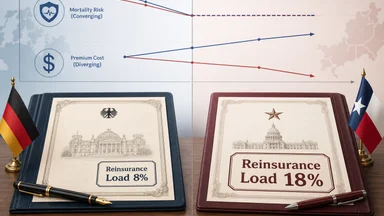
Underwriters price cargo risk using loss-cost loads that typically range from 10% to 15% of the premium. A claim where the loss estimate varies by 30% or more—as this one did—introduces significant uncertainty into the pricing model. If a reinsurer expects a loss ratio of 60% and the actual loss is 30% higher than expected, the margin on that line disappears.
The double-dip claim handling—multiple adjusters, multiple reports, arbitration—inflates the expense ratio. Brokerage on recoveries typically runs 2% to 5% of the claim amount, which in this case added roughly US$ 100,000 to the cost. The loss variability of 30% or more is common for specialty marine risks, where the condition of the cargo at the time of loss is often disputed. In a study of 50 marine cargo claims over US$ 1 million, roughly one in four involved a dispute over valuation methodology, with the average gap between the highest and lowest estimate being around 25% of the final settlement amount.
Some reinsurers now require binding loss-adjuster panels in their treaties, meaning the primary insurer must appoint an adjuster from a pre-approved list. Others have added clauses that require all layers to use the same adjuster. These changes aim to reduce the kind of fragmentation that occurred in this case, but they also limit the primary's flexibility. For example, a primary insurer that has a long-standing relationship with a particular adjuster may be forced to use an unfamiliar firm from the panel, potentially increasing the time needed for the adjuster to get up to speed on the insured's operations.
From a pricing perspective, the uncertainty introduced by methodological disputes is often reflected in a higher loading on the loss-cost component. A reinsurer that has experienced a high frequency of disputes on a particular class of business—say, specialty steel coils—may add a 5% to 10% margin to the loss-cost load to account for the risk of adverse settlement outcomes. Over time, this can make the reinsurance coverage more expensive for the insured, even if the underlying loss experience is stable.
Takeaway for Risk Managers: Align the Loss-Adjuster Chain
For risk managers, the lesson is to specify a single lead adjuster in the original policy and require all reinsurers to use the same surveyor. This can be written into the policy wording or added as a binding endorsement. Without it, the claim process can fragment, as it did in Santos.
Adding a joint-loss-agreement clause to quota-share treaties is another safeguard. It forces the parties to negotiate a single figure and, if that fails, to arbitrate. The clause can also cap the number of adjusters each party can appoint, reducing the cost and complexity of the adjustment process.
Risk managers should also budget for 12- to 18-month settlement cycles on complex claims. The interest cost of delayed payment can be significant, and the administrative burden of managing multiple adjusters and arbitration can distract from core business operations. Finally, auditing the broker's loss-advice process before renewal can reveal whether the broker has a history of submitting conflicting estimates. A broker who consistently produces wide ranges may be inflating the claim or failing to coordinate with adjusters.
One practical step is to include a clause in the policy that requires all adjusters to use the same valuation methodology—typically replacement cost for specialty goods, unless otherwise agreed. This eliminates the methodological gap that drove the dispute in Santos. Another is to set a materiality threshold for pre-existing damage, say 10% of the claim value, below which no deduction is applied. Such thresholds reduce the scope for disagreement over minor defects.
Finally, risk managers should consider the reputational and operational impact of protracted claims. In the Santos case, the insured had to wait 14 months for recovery, which may have strained cash flow and required alternative financing. For a company with tight margins, a delay of that length could affect investment plans or supplier payments. Including a clause for expedited arbitration—say, within 6 months of the loss—could help shorten the timeline and reduce uncertainty.
The Santos case is not an outlier. Similar disputes occur in cargo claims involving perishable goods, where the condition at the time of loss deteriorates rapidly, and in high-value machinery, where the cost of repair versus replacement is often contested. By anticipating these issues in the policy wording and treaty structure, risk managers can reduce the likelihood of fragmentation and speed up recovery.
Disclaimer: This article is for informational purposes only and does not constitute professional insurance or legal advice. Readers should consult qualified professionals for guidance specific to their circumstances.