The German D&O Policy That Paid a California Board Demand at a Frankfurt Rate


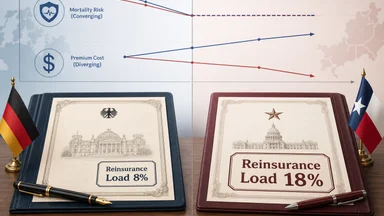
In the summer of 2023, the board of a mid-sized California technology company received a demand letter from a shareholder group alleging breach of fiduciary duty in a acquisition valuation. The company's directors and officers (D&O) policy had been purchased through a Frankfurt-based carrier, part of a global program designed to cover operations across the United States and Europe. The premium had been set at a rate typical for German Aufsichtsrat exposures—roughly a third of what a US-domiciled carrier would have charged for comparable limits. That pricing mismatch would soon become painfully apparent.
A Single D&O Claim Crosses Two Continents
The demand letter, filed in California state court, sought unspecified damages for alleged misrepresentations in the merger proxy. The carrier, a German insurer writing D&O under Solvency II capital rules, initially acknowledged coverage but reserved rights. Defense costs in the US quickly escalated: hourly rates for Silicon Valley securities litigators ran several times the cost of German corporate counsel. Within six months, the carrier had paid out roughly €400,000 in defense fees—more than the entire annual premium for the policy.
The case exemplifies a structural problem in cross-border liability insurance: products priced for one jurisdiction's legal environment are routinely sold to cover risks in another, often without adequate adjustment. US D&O premiums typically run three to five times higher than equivalent German coverage, reflecting the different litigation landscape. Securities class actions in the US can produce settlements in the tens of millions of dollars, while German D&O claims rarely exceed single-digit millions.
The carrier eventually settled the demand for an undisclosed amount, but the policyholder faced a significant self-insured retention that had not been anticipated. The broker had not recommended a separate US-domiciled primary layer, a common oversight in multinational programs. As one risk manager later remarked, the policy had been designed for Frankfurt, not for Fremont.
Pricing Divergence: German Actuarial Tables vs. US Litigation Reality
German D&O pricing is calibrated to the exposures of the Aufsichtsrat (supervisory board), which under the German Stock Corporation Act has a more limited liability profile than US boards. Derivative lawsuits are rare, and securities class actions are virtually nonexistent. Actuarial tables reflect decades of low claims frequency and severity. In contrast, US D&O underwriters must account for the Private Securities Litigation Reform Act, the Securities Exchange Act, and a plaintiff bar that files hundreds of federal securities class actions each year.
The median settlement in US securities class actions, as of late 2024, was around US$ 10–20 million, according to data from a major consulting firm. German D&O settlements rarely exceed €2 million. Loss-development curves also diverge: US claims tend to be reported and resolved within three to five years, while German claims often take longer to surface but settle for smaller amounts. Reinsurance treaties often aggregate exposures across both markets, obscuring the true cost of US risk for European carriers.
One underwriter interviewed for this article acknowledged that his pricing models for US exposures were largely based on US actuarial data, but that the final rate was often negotiated down to match global program budgets. "The local CFO wants a single premium number for the whole group," he said. "They don't want to hear that US coverage costs five times as much."
Regulatory Gaps in Transatlantic Coverage
EU Solvency II imposes a risk-based capital framework that treats D&O as a relatively low-risk line, given the limited loss history in Europe. US state-based solvency regulation, by contrast, requires higher capital charges for D&O because of the larger tail risk from securities litigation. The German Versicherungsaufsichtsgesetz (Insurance Supervision Act) restricts policy wording in ways that can create coverage gaps when applied to US claims. For example, German law requires that policy terms be clear and unambiguous, but US courts often interpret ambiguous terms in favor of policyholders.
The definition of "wrongful act" varies significantly. German policies typically define it narrowly as a breach of duty under German corporate law, while US policies include a broader range of conduct, including negligence and omissions. There is no harmonized definition across jurisdictions. In the California case, the carrier argued that the shareholder demand did not constitute a "claim" under German policy language because it was not a civil proceeding. The policyholder's US counsel countered that California law treats demand letters as claims triggering coverage.
A separate case from Michigan illustrates the environmental D&O risk that can arise. In July 2026, the Michigan Attorney General sued a water services company for allegedly submitting false reports under the Natural Resources and Environmental Protection Act. The company's D&O policy, written by a European carrier, had no specific exclusion for environmental reporting violations. The carrier is now litigating coverage, arguing that the claim falls outside the policy's definition of a "wrongful act." The outcome remains pending, but it highlights how regulatory gaps can leave carriers and policyholders in uncharted territory.
The Frankfurt Policy's Hidden Exclusions
The policy at the center of the California case contained several provisions that proved costly. Most critically, it was silent on the costs of US securities litigation, including the possibility of a parallel SEC investigation. Defense-cost sublimits were set at €250,000 per claim—enough for a German arbitration but exhausted within weeks in US discovery. The policy also defined "defense costs" narrowly, excluding expert witness fees and e-discovery expenses, which in US cases can run into the hundreds of thousands of dollars.
Under German law, a board demand letter does not automatically constitute a "claim" triggering coverage. The policy required a "written demand for monetary or non-monetary relief" but did not specify whether a pre-litigation demand qualified. The carrier initially denied coverage on that basis, forcing the policyholder to fund its own defense for two months before the carrier relented under pressure from the broker. The self-insured retention was set at €100,000, but the policyholder had expected it to apply only to indemnity, not defense costs—a distinction not clearly spelled out in the policy.
The broker had not advised the policyholder to purchase a local US D&O policy or to add a US-specific endorsement. Such endorsements are available from most global carriers and typically broaden the definition of "claim," increase defense-cost limits, and include securities litigation coverage. The omission was not malicious; the broker simply assumed the global policy would suffice. It did not.
Trade-Offs in Global D&O Programs: Centralization vs. Local Compliance
Multinational programs offer cost efficiencies and centralized control, but they introduce risks when local legal environments diverge sharply. A centralized program allows the parent company to negotiate a single premium across all subsidiaries, often at a lower aggregate cost than separate local policies. However, this approach assumes that the underlying risk profile is uniform, which is rarely true. A German parent may pay a blended rate that is higher than a purely domestic German policy but lower than a US-only policy, creating cross-subsidization. The US subsidiary effectively receives coverage at a discount, while the European subsidiaries pay a premium that reflects US risk.
One alternative is a local-admitted policy in each jurisdiction, which ensures compliance with local insurance regulations and policyholder protections. In the US, an admitted policy must be filed with state regulators and is subject to state guaranty funds. Non-admitted policies, often used in global programs, bypass these protections and may leave the policyholder exposed if the carrier becomes insolvent. The trade-off is cost: admitted policies are typically more expensive because they include premium taxes and regulatory fees, and they require separate filings in each state. For a company with operations in multiple US states, the administrative burden can be significant.
Another approach is a controlled master program (CMP), where a single carrier issues a master policy in the home country and local policies in each jurisdiction, all under the same terms and conditions. This reduces coverage gaps but still requires local compliance. In practice, many CMPs use non-admitted policies in the US, which can create issues with state insurance departments. A 2023 survey by a major broker found that roughly 40% of multinational D&O programs had at least one coverage gap related to jurisdictional differences, most commonly in the definition of "claim" or "defense costs."
The California case illustrates the cost of centralization. The policyholder's global program had a single D&O limit of US$ 10 million, shared across all operations. After the US claim exhausted the defense-cost sublimit, the remaining limit was insufficient to cover a potential settlement. The policyholder had to purchase additional excess coverage mid-term at a higher rate. A separate US primary layer, even with a lower limit, would have preserved the global limit for non-US exposures.
Counter-Argument: When a Global Policy Might Work
Not every multinational company needs a separate US D&O policy. For companies with minimal US operations—say, a German Mittelstand firm with a single sales office in New York and no US shareholders—the risk of a securities class action is low. The US subsidiary may have only a few employees and limited assets. In such cases, a global policy with a US-specific endorsement may be sufficient. The endorsement typically broadens the definition of "claim" to include pre-litigation demands and regulatory investigations, and it increases defense-cost sublimits to reflect US rates. It may also add coverage for SEC investigations and derivative demands.
The key is to assess the actual exposure. A company that is publicly traded in the US, has a large US shareholder base, or operates in a heavily regulated industry (such as healthcare or financial services) faces a higher risk of US litigation. For such companies, a separate US primary layer is advisable. But for a private company with a small US footprint, the incremental cost of a US policy may not be justified. The broker in the California case failed to make that distinction; the company was mid-sized but had significant US operations and a US shareholder base, making it a target for securities litigation.
Lessons for Multinational Risk Managers
The first lesson is straightforward: never rely on a local D&O policy written under European law to cover US risks. The exposures are fundamentally different, and the policy language is unlikely to provide adequate protection. Risk managers should require a US-domiciled primary layer for all US operations, written on a US policy form and admitted in the relevant states. The global program can serve as excess coverage, but only after the local layer is exhausted.
Second, audit the definitions of "claim" and "defense costs" in every policy. Ensure that pre-litigation demands, regulatory investigations, and shareholder derivative actions are explicitly covered. If the policy uses terms like "civil proceeding" or "written demand," clarify in writing what those terms mean in each jurisdiction where the company operates. A side letter from the carrier can provide certainty.
Third, demand separate limits for US and EEA operations. A single aggregate limit shared across both regions invites disputes over allocation. If a US claim exhausts the limit, European exposures become uninsured. Side-A difference-in-conditions coverage can fill gaps for non-indemnifiable losses, such as fines or penalties that cannot be reimbursed by the company under local law. Several carriers now offer this as a standalone product.
Fourth, consider the role of captive insurance companies. A captive can provide a dedicated layer of D&O coverage for US risks, funded by the parent company. This allows the captive to accumulate reserves and manage claims centrally. Captives are particularly useful for companies with a long track record of low claims, as they can retain risk that the commercial market would price conservatively. However, captives require regulatory approval and capital, and they are not suitable for all companies.
Finally, work with a broker who has deep experience in cross-border D&O. The broker in the California case was competent in German corporate insurance but had limited US liability knowledge. A broker with a dedicated US D&O practice would have flagged the gaps. As one risk consultant put it, "You wouldn't let a general practitioner perform heart surgery. Don't let a domestic broker handle a multinational D&O program."
What the Love Insurance Kompany Film Tells Us About Risk
The 2026 Tamil science-fiction romantic comedy Love Insurance Kompany is set in 2040, where a dating app named LIK uses algorithms to match people and insure their relationships against failure. The film's protagonist, who believes in natural love, challenges the system. While the premise is fictional, it touches on a real tension in insurance: the gap between algorithmic risk models and the messy, jurisdiction-specific reality of liability.
The film's app-based risk engine assumes that love can be quantified and priced uniformly across all users. In much the same way, a global D&O policy priced using European actuarial tables assumes that the liability environment is similar everywhere. It is not. The film's 2040 setting exaggerates the current state of insurtech, but the underlying critique is valid: models that ignore jurisdictional nuance produce bad outcomes.
Natural risk—the unpredictable human element—versus engineered risk, the product of legal systems and regulatory frameworks, is a distinction that the film dramatizes. In D&O, the engineered risk of US securities law is far larger than the natural risk of a German board making a bad decision. The film ends with a compromise between the app and the naturalists, suggesting that neither pure data nor pure intuition suffices. For risk managers, the lesson is similar: trust local experts, not global models, when the stakes involve cross-border liability.
This article is for informational purposes only and does not constitute professional insurance, legal, or financial advice. Readers should consult qualified professionals for advice tailored to their specific circumstances.